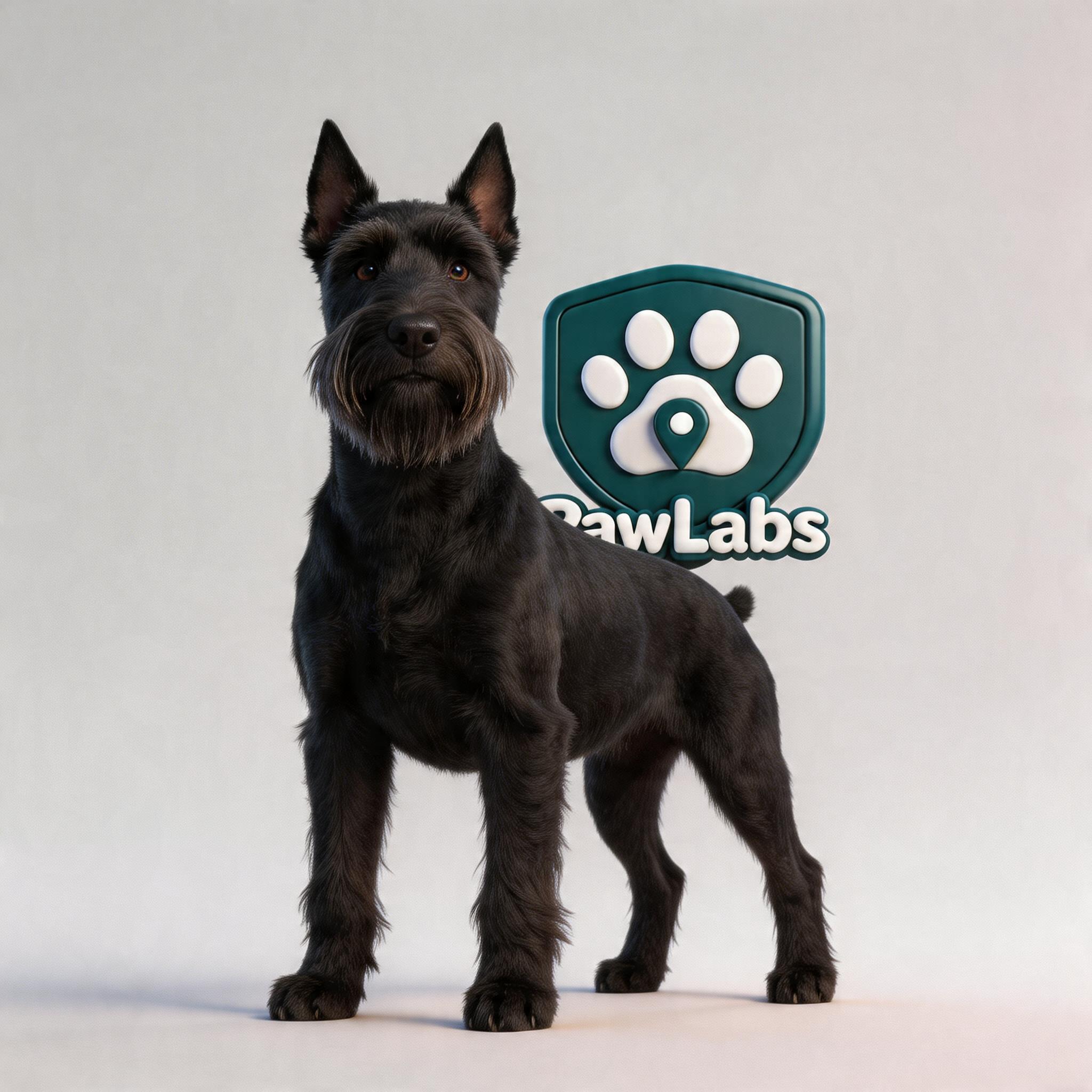
Giant Schnauzer
A powerful, protective giant with a sharp mind and boundless energy.
Original Role: Guarding and driving livestock
💪 Strengths
- + Exceptional guarding instincts and loyalty to family
- + Highly trainable with a sharp intellect
⚠️ Weaknesses
- − High energy and need for mental stimulation
- − Can be territorial or aloof with strangers
📜 Breed History
The Giant Schnauzer hails from Germany, specifically the Bavarian and Württemberg regions, where it emerged in the 17th century as a versatile working dog. Originally bred to drive cattle and guard livestock, these dogs were a larger, more powerful version of the Standard Schnauzer. Farmers needed a rugged canine capable of handling tough terrain and protecting their herds from predators and thieves. The breed’s roots likely trace back to crossing Standard Schnauzers with larger breeds like the Great Dane or Bouvier des Flandres, though exact lineage remains a bit murky.
By the late 19th and early 20th centuries, Giant Schnauzers transitioned from rural farms to urban settings, where they served as guard dogs for factories, breweries, and butchers in Munich. Their imposing size and alert nature made them a natural fit for security roles. During World War I and II, they were utilized by the German military for police and patrol work, showcasing their intelligence and trainability. The breed was recognized by the American Kennel Club in 1930, though it remained relatively rare outside Europe until the mid-20th century. Today, Giant Schnauzers are celebrated as both working dogs and loyal companions, though their protective instincts and high energy demand owners who understand their heritage.
A Towering Guardian with a Mind of Its Own
I’ve spent countless hours with Giant Schnauzers over the years, and let me tell you, they are not for the faint of heart. These dogs are a force of nature—tall, muscular, and brimming with an intensity that can either awe or intimidate, depending on the day. I’ve watched a Giant Schnauzer stand like a statue at a fence line, staring down a delivery driver with such focus you’d think they were guarding a fortress. But I’ve also seen that same dog melt into a goofy, wagging mess when their owner comes home after a long day. They’re a paradox: fiercely protective yet deeply loyal, brilliant yet stubborn. If you’re considering bringing one into your life, you’d better be ready for a dog that will challenge you as much as they love you.
Temperament & Personality
Living with a Giant Schnauzer feels like having a personal bodyguard who occasionally forgets they’re not the boss. They’re wired to protect, and I’ve seen them instinctively position themselves between their family and a perceived threat, whether it’s a stranger at the door or a suspicious squirrel in the yard. That protective streak makes them incredible watchdogs, but it also means they can be wary of new people. Socialization is non-negotiable—I’ve met poorly socialized Giants who barked at every shadow, turning walks into a stressful ordeal.
On the flip side, with their family, they’re often affectionate in a quiet, dignified way. They’re not lap dogs, despite what they might think when they try to climb onto your couch. I’ve had a 90-pound Giant rest his wiry beard on my knee, just staring into my soul, waiting for a pat. They crave connection but aren’t overly clingy. That said, they’ve got a playful side that comes out in bursts—think sudden zoomies around the living room at 6 a.m., knocking over anything in their path. Their personality is big, bold, and sometimes a little too much for the unprepared.
Exercise & Activity Needs
These dogs are not couch potatoes. I’ve walked Giants who could happily trek five miles and still beg for a game of fetch afterward. They were bred to work long hours herding cattle and guarding property, so their energy levels are through the roof. Plan on at least 60 to 90 minutes of vigorous exercise daily—think long hikes, jogs, or intense play sessions. Without it, they get bored, and a bored Giant Schnauzer is a destructive one. I’ve seen them chew through fence posts and dig craters in backyards when understimulated.
Mental exercise is just as critical. Puzzle toys, scent games, or training drills keep their sharp minds engaged. I remember a breeder telling me about a Giant who figured out how to open a gate latch after watching her do it twice. If you don’t give them a job, they’ll invent one, and it might involve redesigning your landscaping.
Training & Intelligence
Giant Schnauzers are scary smart, but that doesn’t mean they’re easy to train. I’ve worked with plenty who mastered commands like ‘sit’ and ‘stay’ in a single session, only to ignore me the next day just to see if I’d notice. They’ve got an independent streak a mile wide, and if they don’t respect you, good luck getting compliance. Consistency and confidence are key—waver for a second, and they’ll sense it. Positive reinforcement works wonders, though. I’ve seen a stubborn Giant light up for a treat or praise during agility training, suddenly eager to please.
Early socialization and obedience training are musts. Without them, their natural suspicion of strangers can turn into overprotectiveness. I’ve met Giants who, with proper training, could calmly greet guests at the door, but it took months of deliberate exposure to get there. They’re not impossible, just demanding.
Health & Lifespan
Giant Schnauzers typically live 12 to 15 years, which is decent for a large breed, but they’re not without health challenges. Hip dysplasia is a concern—I’ve known several who developed a limp as they aged, requiring pricey vet visits and sometimes surgery. Bloat, or gastric torsion, is another risk, especially since they’re deep-chested. I always advise owners to feed smaller, frequent meals and avoid heavy exercise right after eating.
They’re also prone to certain cancers, like toe cancer (digital squamous cell carcinoma), which I’ve seen devastate owners when it requires amputation. Autoimmune thyroiditis pops up too, so regular vet checkups and bloodwork are non-negotiable. Budget for potential costs; I’ve talked to owners who’ve spent thousands on joint supplements and specialist care over the years. They’re tough dogs, but not invincible.
Grooming & Maintenance
That wiry, weather-resistant coat isn’t low-maintenance. I’ve spent hours brushing Giants to prevent matting, especially around their legs and beard, where dirt and food love to hide. They don’t shed much, which is a blessing, but they need regular clipping or hand-stripping every 6 to 8 weeks to keep that classic Schnauzer look. I’ve taken mine to professional groomers because doing it myself was a two-hour wrestling match.
Their beard needs daily wiping—trust me, after a drink of water, it’s a dripping mess. Ears should be checked weekly for wax buildup since they’re prone to infections. It’s not overwhelming, but if you’re not into grooming, you’ll feel the burden. I’ve known owners who slack off, only to deal with a scruffy, tangled dog who looks miserable.
Diet & Nutrition
Feeding a Giant Schnauzer takes some thought. They’re big, active dogs, so they need a high-quality diet with plenty of protein to support muscle mass. I’ve fed mine premium kibble with raw meat toppers, averaging 3 to 4 cups a day split into two meals to reduce bloat risk. Puppies grow fast, so I’ve always consulted vets about portion control to avoid skeletal issues.
Some Giants have sensitive stomachs—I’ve dealt with one who got gassy and bloated on cheap food, so trial and error might be needed to find the right brand. Watch for weight gain as they age; I’ve seen a few get chunky when exercise tapered off, putting stress on their joints. Treats are fine, but moderation is your friend.
Living Conditions
These dogs can adapt to various homes, but they’re not ideal for small apartments. I’ve seen Giants pace restlessly in tight spaces, clearly frustrated without room to stretch their legs. A house with a fenced yard is best—they love patrolling their territory. I’ve had one who’d spend hours watching the perimeter, barking at passing dogs like it was his full-time job.
They handle cold climates well thanks to that dense coat, but hot, humid weather can wear them down. I’ve noticed mine panting heavily during summer walks, so shade and water are essential. They’re happiest with space to roam and a family that’s active, not sedentary.
Who Should Get This Breed
If you’re an experienced dog owner with a knack for leadership, the Giant Schnauzer could be your match. I’ve seen them thrive with active folks—runners, hikers, or people who can commit to daily mental and physical challenges. They’re fantastic for families who want a protector; I’ve watched a Giant gently nudge a toddler away from a busy street, almost like a nanny. If you’ve got time for training and a firm hand, their loyalty and intelligence will blow you away.
Who Should NOT Get This Breed
If you’re a first-time owner or someone who’s gone 10 hours a day, think twice. I’ve met Giants with separation anxiety who tore apart doors when left alone too long. They’re not for the timid—hesitate to set boundaries, and they’ll walk all over you. Small kids or frail seniors might struggle with their size and strength; I’ve seen a well-meaning Giant knock over a child during a playful lunge. And if you can’t handle exercise or grooming demands, you’ll both be miserable. They’re a commitment, plain and simple.
❓ Giant Schnauzer FAQs
The questions people ask most, answered from this breed's trait scores.
Is the Giant Schnauzer good with children?
The Giant Schnauzer scores 6/10 for child-friendliness, making it usually fine with children who have been taught to handle a dog respectfully. That score reflects the breed's typical temperament, not any individual animal — early socialisation and how the dog was raised matter just as much. Supervise interactions with toddlers whatever the breed.
Does the Giant Schnauzer get along with other pets?
Scoring 5/10 for pet-friendliness, the Giant Schnauzer is usually fine with other pets once introduced properly. Prey drive matters here as well as sociability: breeds built to chase can live happily with a household cat they grew up with and still pursue an unfamiliar one.
How much exercise does the Giant Schnauzer need?
The Giant Schnauzer rates 8/10 for energy and needs at least an hour to 90 minutes a day, and it should be real exercise rather than a stroll. Under-exercised, this is a breed that finds its own entertainment — usually at the expense of your furniture. The breed was originally developed for guarding and driving livestock, which is where that requirement comes from.
Does the Giant Schnauzer shed a lot?
At 3/10 for shedding, the Giant Schnauzer sheds lightly. It has a medium wire coat. Worth knowing: low shedding is not the same as hypoallergenic — most people react to proteins in dander and saliva, not to hair itself, so no breed is genuinely allergy-free.
Is the Giant Schnauzer easy to train?
The Giant Schnauzer scores 8/10 for trainability, making it responsive and straightforward to train. It scores 9/10 for intelligence — worth separating from trainability, because a clever breed that has decided not to listen is harder work than a simpler one that wants to.
What is the average lifespan of the Giant Schnauzer?
The Giant Schnauzer typically lives 12–15 years. We rate the breed 6/10 for general health robustness. Individual lifespan depends heavily on genetics, weight management and veterinary care.
How big does the Giant Schnauzer get?
A full-grown Giant Schnauzer usually weighs 55–105 lbs and stands roughly 23–28 inches at the shoulder. That places it in the large size band. Males generally sit at the upper end of both ranges.
Does the Giant Schnauzer bark a lot?
Rated 6/10 for barking, the Giant Schnauzer barks a moderate amount. Training and adequate exercise both reduce nuisance barking, but they will not turn a naturally vocal breed into a silent one.
Is the Giant Schnauzer suited to apartment living?
The Giant Schnauzer is a difficult fit for apartment living. It scores 6/10 for adaptability, 8/10 for energy and 6/10 for barking — the three traits that decide this. Floor space matters far less than whether the breed can settle indoors and stay quiet while you are out.
Is the Giant Schnauzer a good choice for first-time owners?
On balance the Giant Schnauzer is manageable for a first-time owner who is willing to put the work in early, based on its trainability (8/10), adaptability (6/10) and energy level (8/10). The most common reason a first dog does not work out is a mismatch between the breed's daily needs and the owner's actual routine, rather than anything about the breed itself.
Written and reviewed by PawLabs Editorial Team
We build PawLabs from published kennel club breed standards and veterinary reference sources. Profiles are drafted with AI assistance against that source data, then reviewed and corrected by a person before anything is published. We say so because you should know how the thing you're reading was made. How we research breeds · Report a correction
Note: Breed profiles are general reference, not veterinary advice. For anything concerning your own animal, talk to a vet who can examine them.